
Image Credit: Annie Gunn
In 2022, after more than a decade of being broken up, indie heroes Voxtrot reunited. The Texas-based band first formed in 2003 and soon captured global attention thanks to the pair of EPs—Raised By Wolves and Mothers, Sisters, Daughters & Wives—that they released on their own Cult Hero Records label. Propelled by the momentum of the 2000s blog era, the five-piece—vocalist/guitarist Ramesh Srivastava, lead guitarist Mitch Calvert, bassist Jason Chronis, keyboardist Jared van Fleet and drummer Matt Simon—continued to enjoy significant success. 2006’s Your Biggest Fan EP debuted at #3 on the Billboard Hot Singles Sales chart, and the following year’s self-titled full-length album, which was released on Playlouder/Beggars, reached #14 on Billboard’s Heatseekers chart.
It was no surprise, then, that Voxtrot’s 2022 return was welcomed with a warm embrace by a fanbase whose love for the band had only been magnified by their absence. It was marked by a combined reissue of those first two EPs called Early Music, as well a B-sides and rarities compilation titled Cut From The Stone. It also saw the band tour again for the first time in over a decade. Now, buoyed by the renewed sense of purpose that experience instilled in them, Voxtrot are back with Dreamers in Exile, their second full-length album, and first studio LP for almost two decades.
“The last two shows of our reunion tour were two nights at the Mohawk in Austin,” says Srivastava, “and we decided to decide before they were over. So in the green room before the very final show, we made this official decision to make a new album. That was in November 2022, and in the first week of January 2023, we started recording it.”
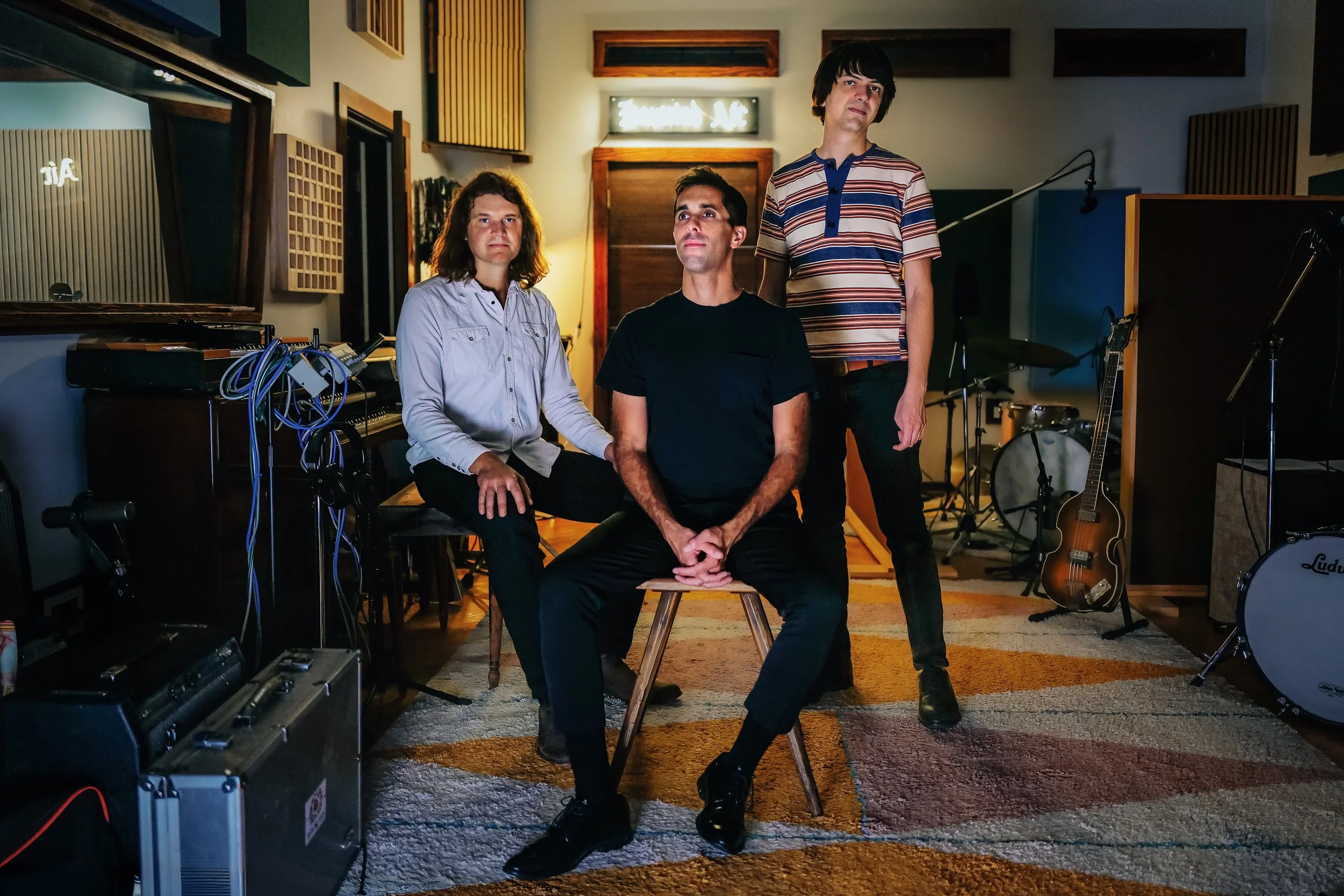
The writing and recording of Dreamers in Exile took place at Chronis’ Haunted Air Studio in Lockhart, Texas, and it was then mixed by Dean Reid (Lana Del Rey, James Blake, The Black Keys). The result is 11 songs that both continue from where Voxtrot’s music left off in 2007, but also infuse it with added time and age. In other words, it’s as much a continuation as it is a reinvention—the sound of the band returning not to reclaim their legacy, but to expand it.
That’s obvious from the very beginning with opener “Another Fire”. A gorgeous, wistful rumination on time and history—both personal and political—it’s a wonderful expression of how the past is a constant influence on the present. Similarly, the second song “Fighting Back” takes a trip into yesteryear with the added wisdom of experience gained. It recalls a time after Voxtrot’s break-up when Srivastava was working as a courier during Grammy and Oscar time, delivering “all this couture from the boutiques on Rodeo Drive to musicians in their mansions and hotel rooms.” The song pushes that experience into the present, mixing vulnerability with defiance as it navigates that history with beautiful, if occasionally bitter, grace.
That’s a constant juxtaposition throughout this record, which balances a deeply and personally political vision of life and the world—'They judge the brown skin like birth was my sin’ sings Srivastava on that opening gambit—with Voxtrot’s trademark romanticism.
“My mindset going into this record was ‘How do I talk about the world and my experience in a way that’s true to right now, and still make it entertaining?’” Srivastava says. “I want it to be enjoyable for people to listen to, but I also want to tell the whole truth about what I'm feeling about life at this time in my life. So I was trying to strike these balances of things being authentic but fun, of being poetic but relatable. That, for me, was the big challenge here.”
It doesn’t in the slightest sound like striking that balance was a challenge. Rather, it sounds like peak Voxtrot, albeit slightly older, more confident and wiser. Both “Fighting Back” and “New World Romance”, for instance, temper the hopes and dreams of love with the complex reality of the real world, while the anthemic title track rushes with a jaded exuberance—the lessons of a harsh world infused into youthful dreams and abandon. Inspired by the 1961 movie Paris Blues starring Sidney Poittier, it shows Voxtrot’s ability to fuse reality and fiction, each one informing the other to create something truly magical and timeless. The same is true of “Esprit de Cœur” and the upbeat “Rock & Roll Jesus”, both of which manage deft social commentary without being heavy-handed about it.
Perhaps most personal of all is album closer “Babylone”, which was as much inspired by the real-life romance of Yves Saint Laurent and Pierre Bergé, as it was by Srivastava’s relationship with his boyfriend at the time. It’s a hauntingly gorgeous, string-laden ballad that, while steeped in disappointment and heartbreak, nevertheless strives to be—and to reflect and represent—something pure and beautiful. Indeed, the song shows just how pure and beautiful love remains, even if t’s no longer there—essentially telling more truth by adding that extra narrative element.
“I very often see a narrative elsewhere that inspires me,” says Srivastava, “and then position myself within it in terms of how I relate to it. My ex-boyfriend worked in tech and was generally a kind of stable, pragmatic person. The balance of our energies — and his belief in me as a musician — fostered an environment where I felt supported and free to create. I saw this parallel because Yves Saint Laurent was such an artiste. He didn't know how to do anything practical, and Pierre Bergé was just like, ‘I believe in your vision. Let me hold the kite while you fly.’”
Voxtrot had already been flying in that first phase of their existence, but they’re doing so again—and gloriously. Though all five members do appear on the record, really the band today is the nucleus of Srivastava, Chronis and Simon. Listening to this record, it’s clear that the chemistry between the three of them is very special indeed. It also allows now to pay perfect tribute to the legacy of then, combining the two as if there’s no difference whatsoever.
“There’s so much optimism—this bright, happy quality—on this record,” says Srivastava, “and I think the reason is because we've learned from everything we’ve experienced in the past. And the most important thing we learned is that we are the people who bring the energy into the room. You can’t wait for it to appear—or for other people in the industry to give you permission. That’s why we’re putting this out on Cult Hero—when you bring your own enthusiasm into the world, it’s truly magnetic. Because it's absolutely real.”